
From Script to Screen: The Magic of Text-to-Video Technology
AI's latest marvel can transform your imagination into reality.


“Any sufficiently advanced technology is indistinguishable from magic” - Arthur C. Clarke
Imagine you have a magical book.
Every time you read a story from it, you can see the story playing out right in front of your eyes, just like a movie.
Text-to-video technology is kind of like that magical book.
First, you tell a computer a story. It could be about anything - e.g. the futuristic world of 3023. You don't have to use any pictures or videos at all, just words.
Once the computer has your story, it starts to imagine the story just like you do when you read a book. But instead of just picturing the story in its mind, the computer can actually create a video of that story (i.e. the world in the year 3023) using video, images, sounds and animations.
The computer achieves this by leveraging AI… and it's recently got pretty good.
The world in 3023, imagined as a futuristic thriller - Source via Runway AI
In a world increasingly dominated by screens, video content reigns supreme. It's engaging, immersive, and preferred by the majority of internet users. But as our hunger for video content grows, so does the challenge of creating it at scale.
Enter text-to-video technology, a game-changing innovation that is transforming the way we create and consume content.
Applications such as Runway’s Gen-2, Lumen5, Synthesia & many more are making content creation extremely accessible and easy-to-use, producing surprisingly high quality content given how early we are in this trend.
In this post, we’ll dive into the latest trend of AI-powered text-to-video exploring how this technology emerged, how it works and how it’s already redefining several industries.
Let's dig in.
Words in Motion: The Evolution of Text-to-Video Technology
Imagine you're in the early 2000s.
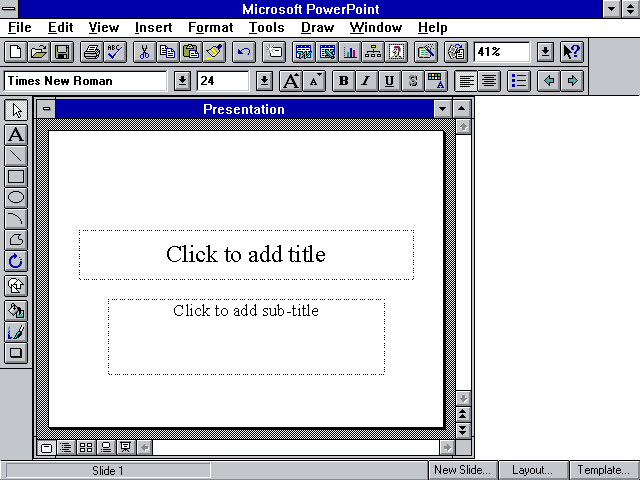
You've painstakingly crafted a PowerPoint presentation, each slide carefully paired with a snippet of text, the transitions set, the color scheme chosen with utmost care. You hit the "play" button, and the slides begin to rotate, with a robotic voice narrating the text you've input. This was our first encounter with text-to-video technology.
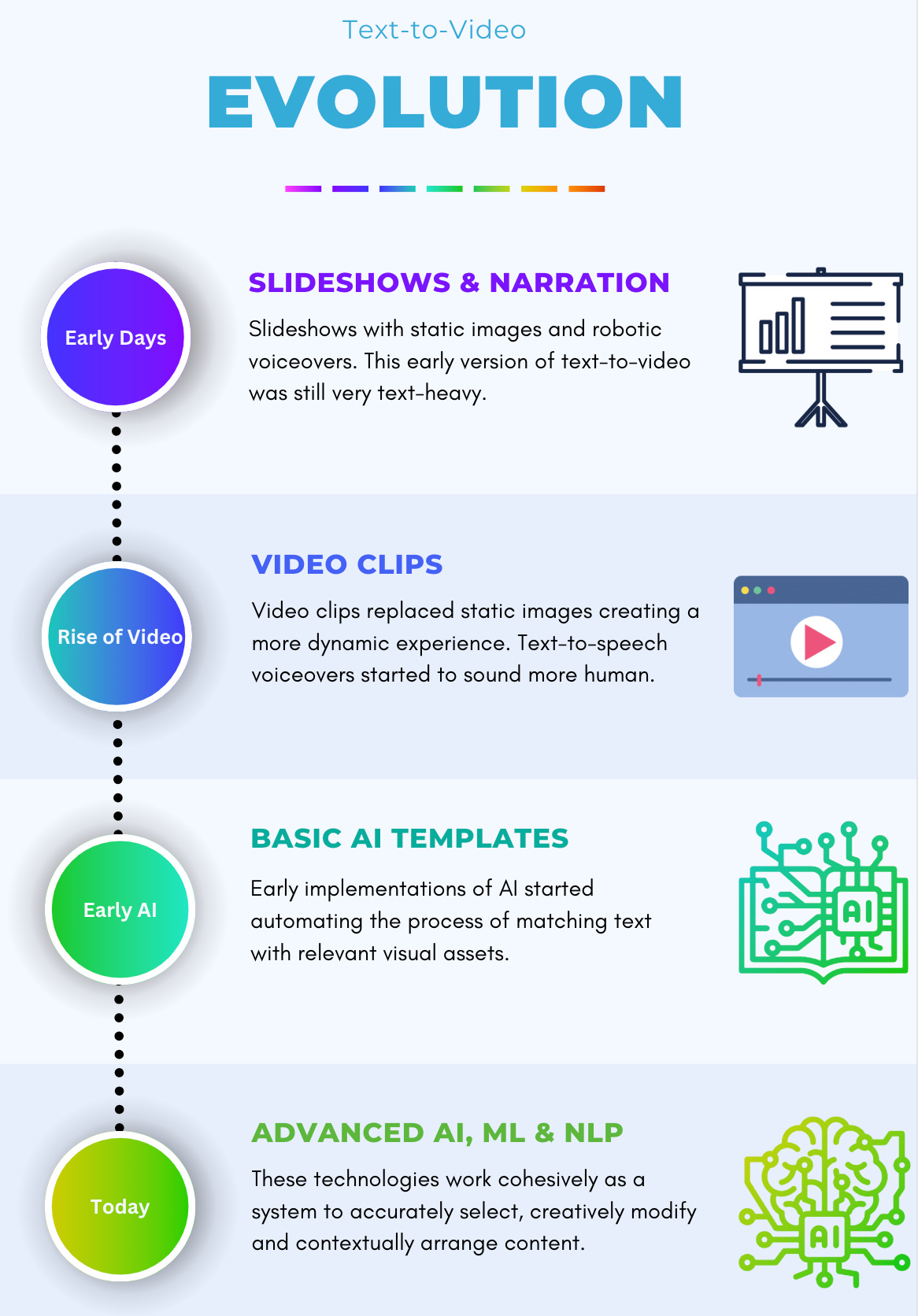
The Early Days: Basic Slideshows and Text-to-Speech
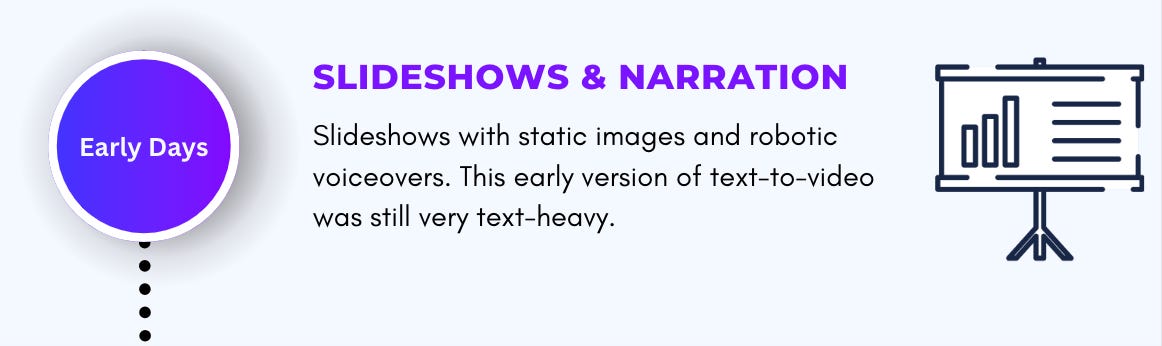
Text-to-video technology's roots lie in simple slideshows, where static images were manually assigned to text segments (remember making those powerpoint presentations as a kid?).
These presentations were “enhanced” with background music, and narration, if any, was provided through the early stages of text-to-speech technology.
It was far from perfect.
The robotic tone coupled with the scrappy animation effects often led to a disconnect between the visuals and narration, leaving much to be desired in terms of engagement and comprehension.
Introduction of Video Clips and Improved Text-to-Speech
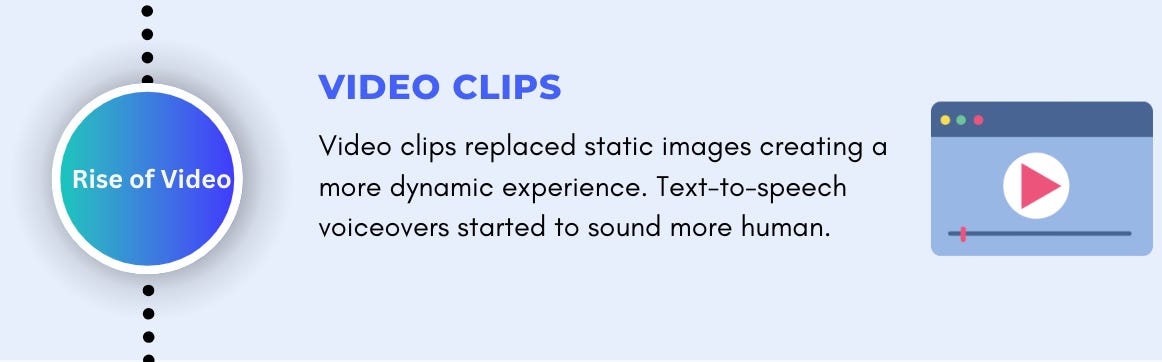
As technology advanced, so did the capabilities of text-to-video.
Video clips began to replace static images, injecting a new level of dynamism into the content. Concurrently, text-to-speech technology improved, resulting in more natural-sounding voices, albeit still lacking the true nuances of human speech.
Imagine the difference between a silent film and a talkie. In the early days of cinema, silent films could tell a story, but there was something missing - the human voice. When talkies came along, they added a whole new dimension to films, making the stories more dynamic and engaging. Similarly, the introduction of video clips and improved text-to-speech in text-to-video technology added a new dimension to the content, making it more engaging and human-like.
However, despite these advancements, the process of matching text segments to appropriate video clips or images remained a largely manual, time-consuming task.

Advent of AI and Template-Based Systems
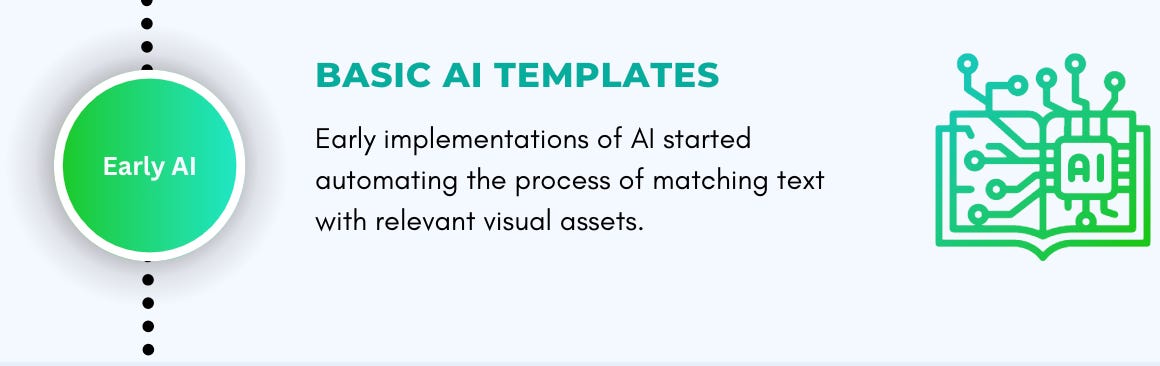
The real game-changer of text-to-video technology was the integration of Artificial Intelligence.
AI enabled semi-automation of the process of matching text with relevant visual content, bringing us closer to the goal of creating engaging, meaningful videos with minimal manual intervention.
During this phase, template-based systems emerged, where users could select a predefined style or template, and the software would arrange the text, images, and video clips accordingly.
Think about baking a cake from scratch versus using a pre-made cake mix. When you bake a cake from scratch, you have to measure all the ingredients and follow the recipe precisely, which can be time-consuming and prone to error. But with a pre-made cake mix, you just have to add a few basic ingredients and follow simple instructions.
The advent of AI and template-based systems in text-to-video technology was like moving from baking a cake from scratch to using a pre-made cake mix! It simplified the process of creating video content.

While these systems significantly reduced the manual effort involved, they were still limited in their abilities.
Today: Advanced AI, Machine Learning, and Natural Language Processing (NLP)
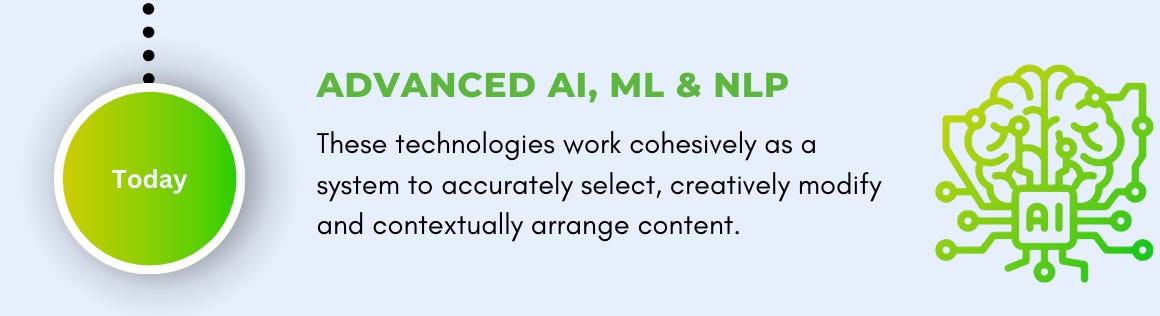
The current state of text-to-video technology is a testament to the strides we've made in AI, machine learning, and natural language processing (NLP) over the last 5 years. These technologies now allow for more accurate content selection and arrangement. They also facilitate the creation of more natural and emotive narration.
It was like moving from driving a manual car to riding in an autonomous vehicle. When you drive a manual car, you have to control all the actions - steering, changing gears, braking, etc. But when you ride in an autonomous vehicle, the car does all the driving for you. It can navigate the road, change lanes, and even park itself.
Suddenly the cost to create video content and unlock one’s imagination has been dramatically reduced.
Modern platforms like Runway Gen-2 and Lumen5 stand as exemplars of this advanced stage. They can fully automate the process of converting text to video, creating engaging and dynamic content with minimal human intervention.

Unraveling the Magic: How it Works
Remember the old adage “revealing how the magic trick works spoils the magic!” ?
This is an instance where I’d disagree - the inner workings of how text-to-video works is so fascinating it's almost like it’s own artform.
I dug into the details so you don't have to, let's get into it.
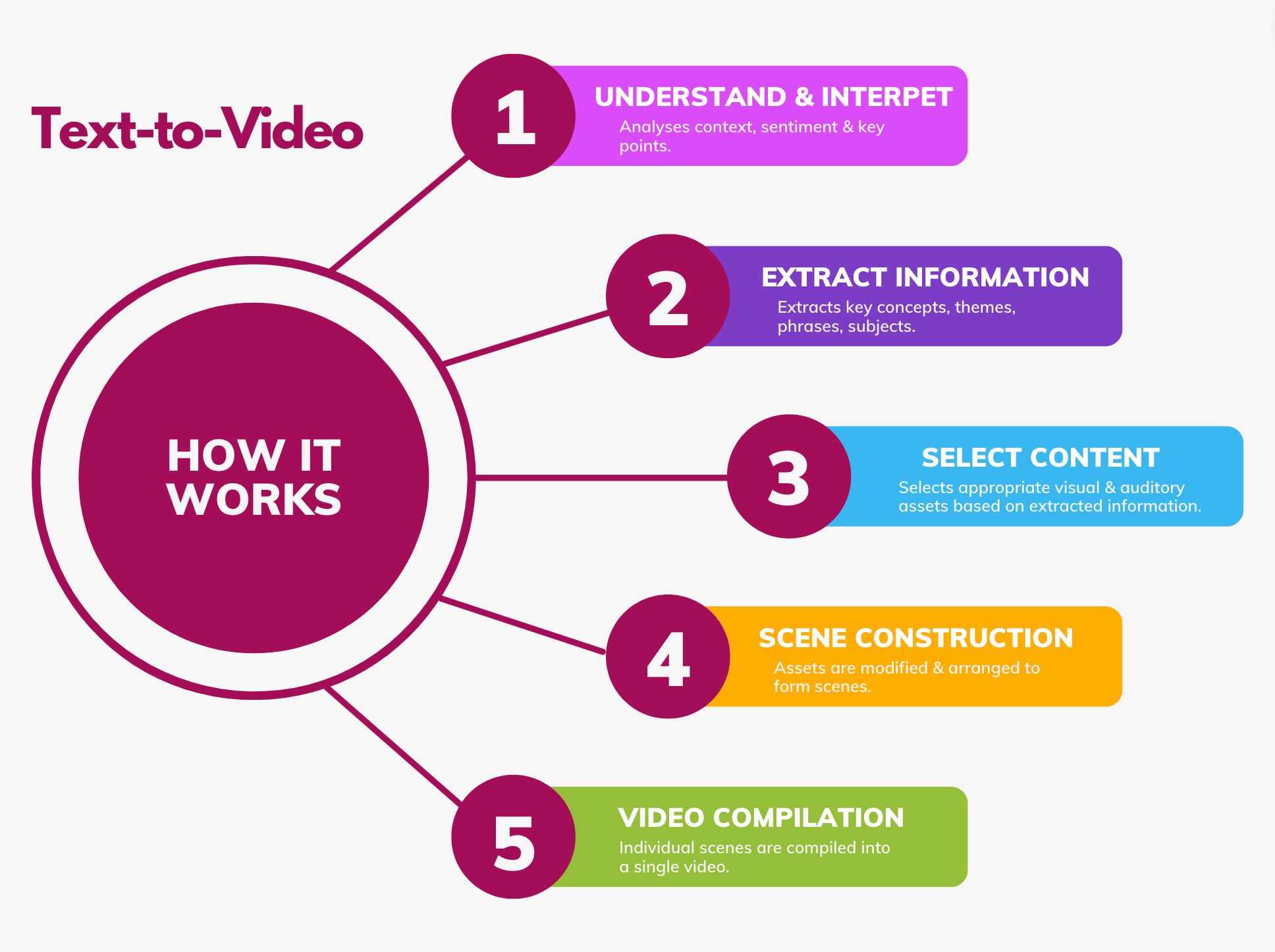
Step 1: Understand & Interpret

Central to modern text-to-video technology is Natural Language Processing (NLP), the component of AI that enables computers to understand, interpret, and generate human language.
When a block of text is input into a text-to-video platform, it first undergoes NLP to comprehend the context, sentiment, and key points of the content.
Pro-tip: Add an AI image
You’ve probably seen tons of AI-generated images across social media. This phenomenon sees the transformation of simple, descriptive text prompts into spectacular AI images that have even won competitions. (If you’re interested in learning more, I did an in-depth analysis here)
Well guess what? You can now combine your text input with an AI generated image to get a more realistic video of what you’re imagining!
For example, let's say you want to create a dramatic video scene of a hero fighting a villain, you can:
Describe the scene
Submit images (with your description) that accurately depict what your hero and villain look like.
The AI system will analyze your images just like NLP does to your text, understanding the subject of the images, textures, gradients etc… and uses these to create a video that resembles these elements!
Step 2: Extract Information

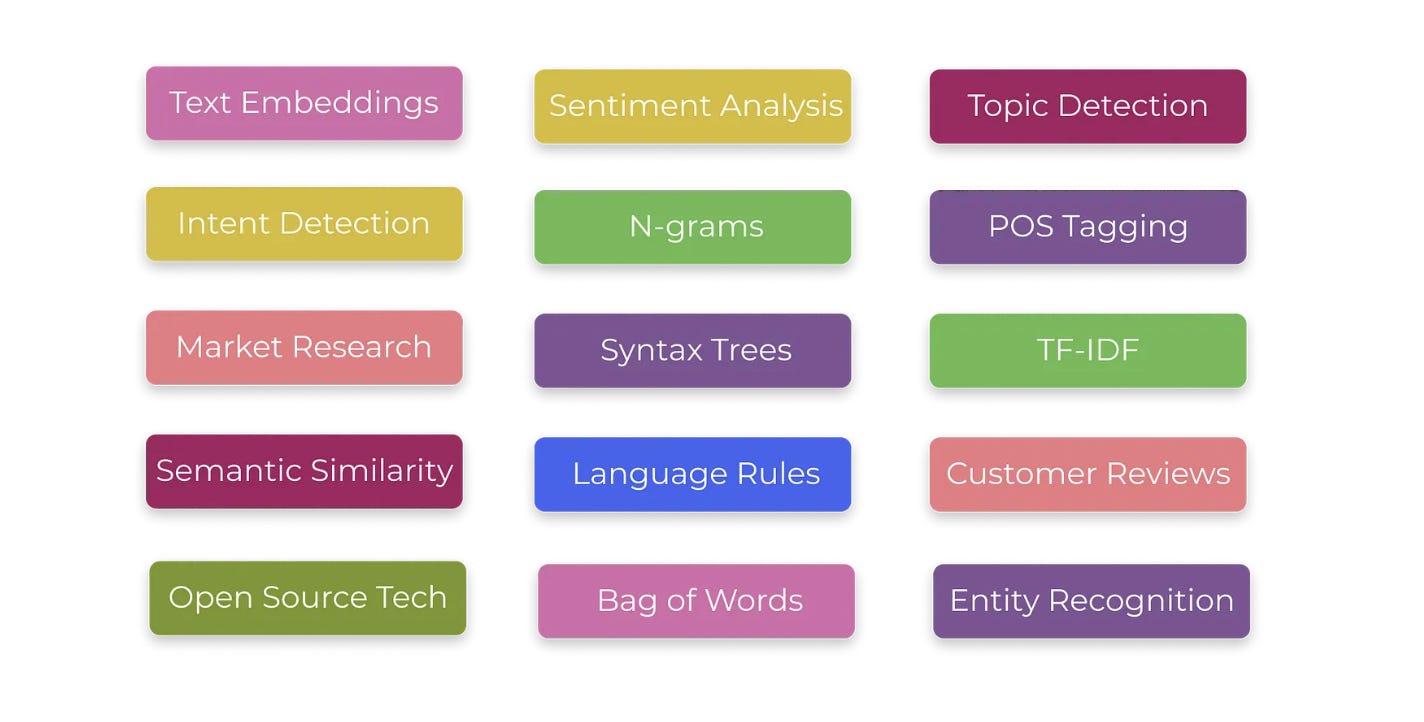
After understanding the text, the AI system now proceeds to extract relevant information. It identifies key concepts, themes, phrases, entities and subjects, which are then used to search for corresponding images, video clips, or animations from a vast media library (the dataset the AI is trained on).
This phase is crucial for determining what the visual representation of the text will be.
It involves a lot of semantic analysis, which interprets the nuances in meaning of the text and identifies and classifies elements of the text into predefined categories such as persons, organizations, locations, etc.
Step 3: Select Content

After extracting the key information, AI then selects the most appropriate visual and auditory assets that align with this. These assets could include images, video clips, animations, and sound effects.
The system uses machine learning algorithms to choose the most relevant and engaging content based on the context of the text. Part of what makes advanced neural networks (‘brains’ but for computers) so powerful here is its ability to select the perfect clip, sound or video element that will form a high quality video.
Step 4: Scene Construction and Text-To-Speech

The selected assets are then arranged into scenes that match the narrative of the original text.
The system decides on the timing, transition effects, and overlays to create a coherent visual story. It also uses computer graphics techniques to manipulate and animate the assets if required (e.g. adding more facial expressions to an existing video clip of a person talking).
In parallel with the scene construction, the system also processes the original text to generate spoken narration. This is accomplished using Text-to-Speech technology (TTS), which converts written text into spoken words.
Step 5: Video Compilation and Post-Processing

Finally, the individual scenes are compiled into a single video. Depending on the sophistication of the software, there may also be options to add transitions, special effects, and other enhancements at this point.
Also worth remembering this entire process is handled by an AI-driven engine, which can learn and improve over time. As it processes more text and receives feedback on the generated videos, it can refine its understanding of language, improve its content selection, and generate more engaging and effective videos!
And… that's it!
Let's walk through a quick example.
Suppose you're a marketer looking to create a promotional video for a new product. You input a written product description into a platform like InVideo. The software, using NLP, identifies the key features of your product. It then searches its media library for relevant visuals and constructs scenes pairing the visuals with the corresponding text. Simultaneously, it generates natural-sounding narration for the text. The scenes are compiled, background music is added, and voila! You have an engaging, professional-grade promotional video.
By fully automating the process of converting text to video, AI is revolutionizing the way we create and consume content… however, the journey doesn't end here.
The future holds exciting possibilities to reshape the landscapes of media, education, business and many more industries.
Changing the Game: The Impacts of Text-to-Video Technology
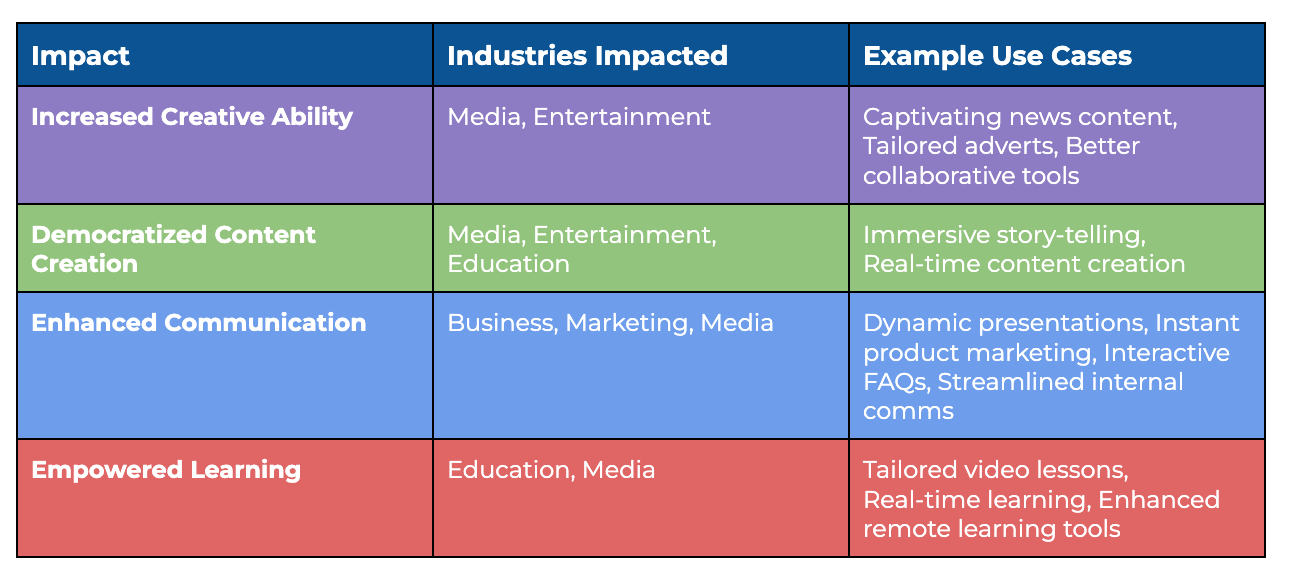
AI text-to-video, isn’t just a shiny new tool. It’s a disruptor, and its impact will be experienced across multiple sectors. From education to business, media to accessibility, it is rewriting the rules and reshaping the future of content creation and consumption.
Here's how.
Expanding Creative Possibilities and Democratizing Content Creation: Shaping Media and Entertainment
Media and Entertainment is where this technology is making waves.
Not only does it expand creative possibilities for storytelling, with screenwriters and directors able to visualize scripts or storyboards, aiding in planning and executing their projects - but it also democratizes content creation.
Platforms like Vidnami allow individuals without professional video editing skills to create quality video content. These platforms are empowering a new generation of YouTubers and indie filmmakers, fostering creativity and innovation.
Empowering Writers and Storytellers
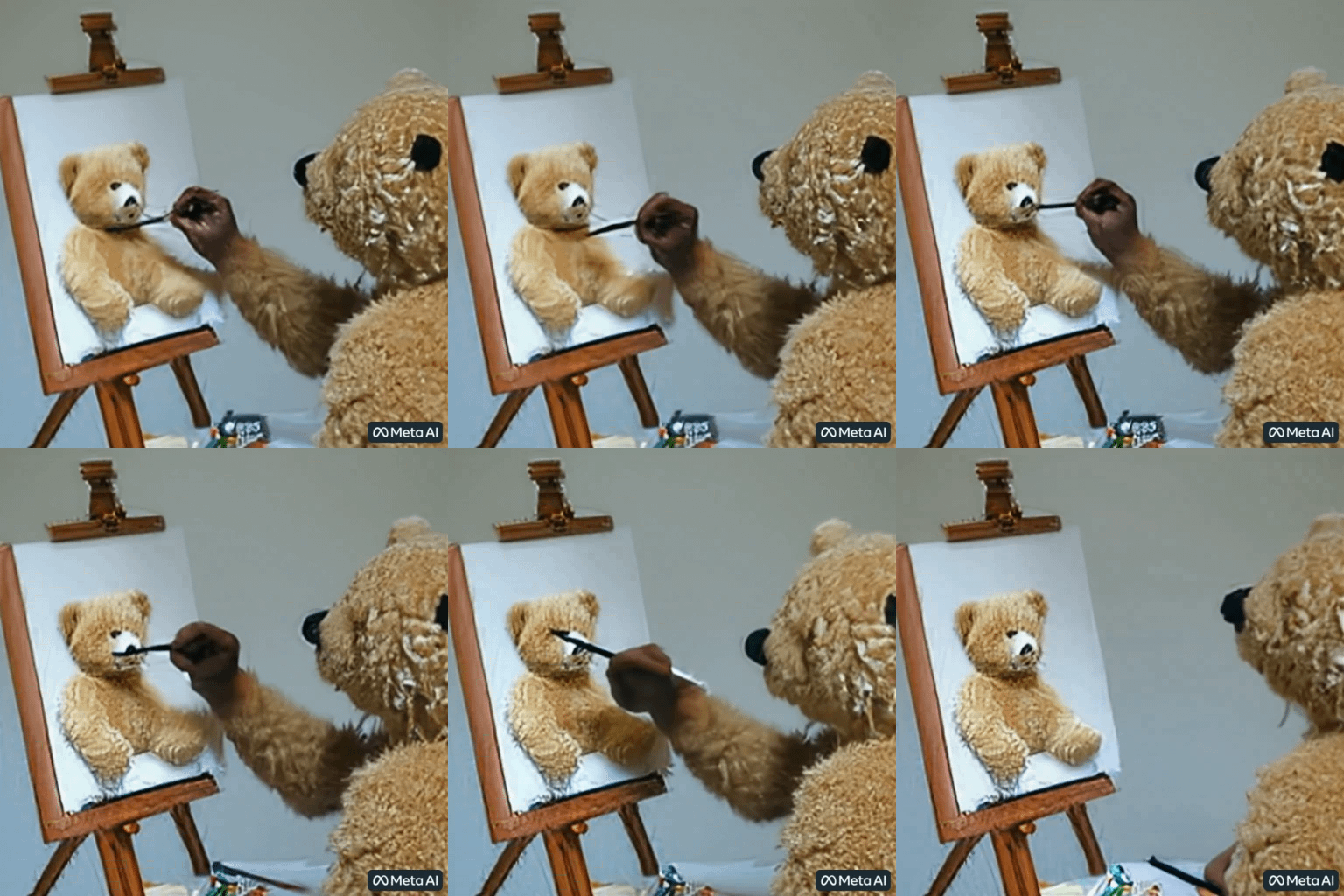
In the realm of storytelling, text-to-video technology is enabling writers and storytellers (e.g. online content creators) to bring their narratives to life in a more visual and immersive format.
Platforms like Make-a-video by Meta let users create videos from written scripts, transforming text-based stories into captivating visual narratives. This opens up new avenues for writers to reach wider audiences and engage them with their stories in a more impactful way.
Revolutionizing Journalism
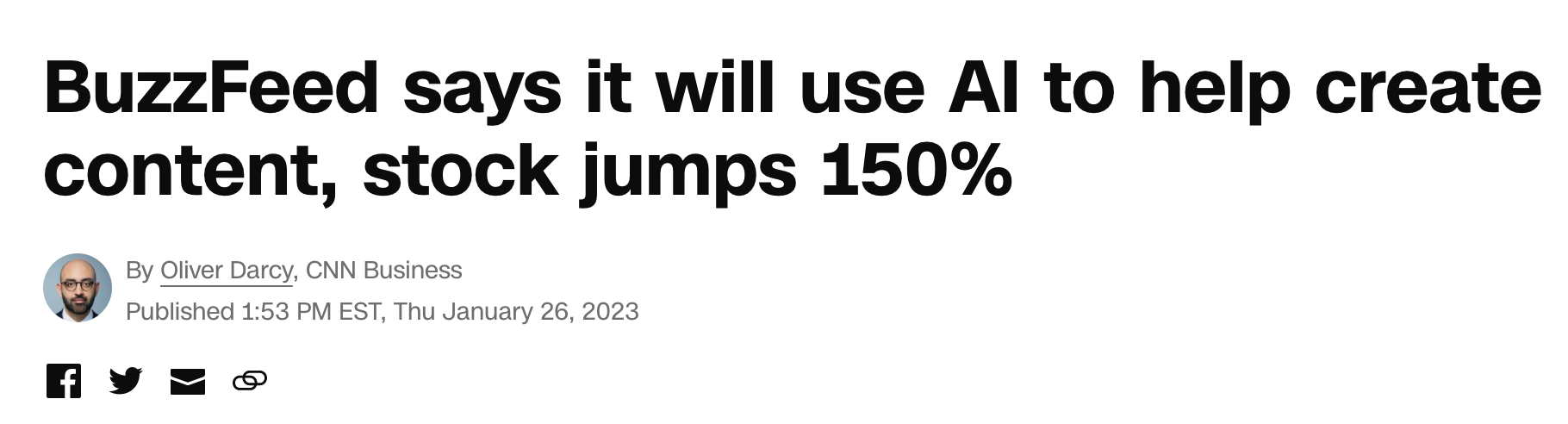
News agencies can now transform written news articles into engaging video summaries or news clips, reaching viewers who prefer video content over text. This not only expands the reach of news agencies but also helps them cater to the changing preferences of news consumers.
For example, CNN, BBC & Buzzfeed have been leveraging text-to-video technology to create short news clips and video summaries for their online and social media platforms. By doing so, they can keep their audiences informed and engaged with their latest news updates in a format that resonates with them.
Enhancing Social Media and Digital Marketing
Marketers and influencers can convert written blog posts, product descriptions, or customer testimonials into eye-catching videos that garner more attention and engagement on social media platforms.
Tools like Lumen5 and InVideo are being used extensively by marketers to create promotional videos, social media ads, and video explainers. These platforms simplify the process of video creation, allowing marketers to focus on crafting compelling stories and messages that resonate with their target audience.
Facilitating Collaboration in the Film Industry
By visualizing scripts and storyboards, filmmakers can better plan their projects, identify potential issues, and communicate their vision more effectively to their teams.
For instance, a screenwriter could use a platform like StudioBinder to create a visual representation of their script, helping the director and cinematographer plan camera angles, shot compositions, and other technical aspects of the film. This not only streamlines the pre-production process but also fosters better collaboration and understanding among the team members.
The Competitive Edge: Driving Business Innovation
Text-to-video technology will fundamentally change how companies operate, market, and communicate. With the power to convert written content into dynamic, visually engaging presentations and automated content, it's giving businesses a competitive edge in today’s economy.
Reinventing Marketing Strategies
With consumers' dwindling attention spans and a preference for video over text, marketers are increasingly relying on this technology to convert written blog posts, product descriptions, or customer testimonials into visually appealing videos that resonate with the target audience.
Companies like Airbnb and Patagonia, for instance, have been leveraging platforms like Lumen5 and Vidnami to transform their customer stories and travel blogs into captivating videos that they share on their social media platforms, thereby increasing their engagement rates and driving conversions.

Streamlining Internal Communications
Companies are using this technology to transform written memos, policy updates, or training materials into engaging videos, ensuring higher engagement and comprehension rates among employees.
For example, companies like IBM and Oracle have been using text-to-video technology to transform their lengthy, written training materials into engaging video tutorials for their employees. This has not only made the training process more engaging for employees but has also improved the overall efficiency of their training programs.
Enhancing Customer Experience
Companies can now transform written FAQs or product guides into interactive video content, improving customer understanding and reducing customer service queries.
Amazon, for instance, uses text-to-video technology to create video guides for its numerous products. This not only helps customers understand the product better but also reduces the load on Amazon's customer support team.

Enabling Rapid News Dissemination
Even industries like finance and trading, where rapid dissemination of information is key, are benefiting from this technology.
Financial news companies are using this technology to convert written market updates into quick, digestible videos, ensuring their clients stay updated with real-time market changes.
Bloomberg, a leading financial news agency, utilizes text-to-video technology to create video summaries of crucial market updates, allowing traders and investors to stay abreast of market changes in a more efficient and engaging way.
From Textbooks to Video Lessons: Transforming Education
In the education sector, text-to-video is not just an add-on; it’s revolutionizing the way knowledge is imparted. Complex topics can now be broken down into bite-sized videos, making them more digestible and engaging for people.
Making Learning Engaging and Fun
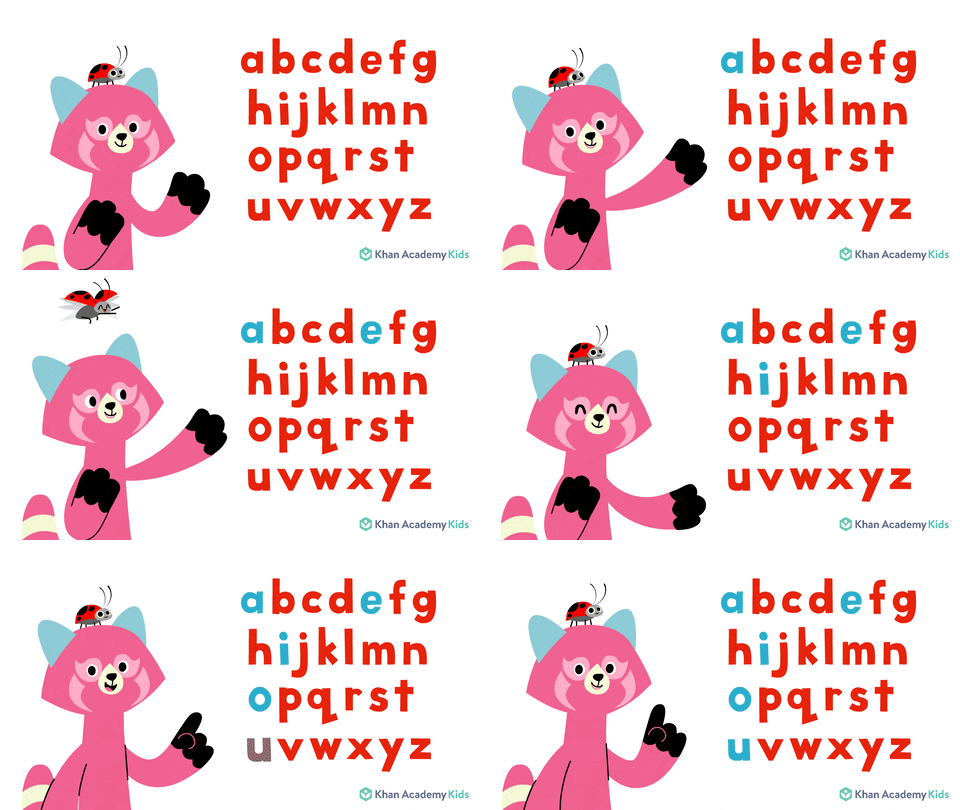
Consider the difference between reading about the solar system in a textbook and watching a 3D animated video about it. The latter not only makes learning more engaging and fun but also aids in better understanding and retention of information. The use of text-to-video technology in creating such educational content is becoming increasingly common.
For instance, Khan Academy, a renowned online educational platform, leverages this technology to transform textual course materials into engaging video lessons, making learning enjoyable and accessible for students worldwide.
Revolutionizing Remote Learning
With the rise of remote learning, especially in the wake of the COVID-19 pandemic, text-to-video technology has proven to be a powerful tool in evolving how we educate.
Teachers are now able to convert their written lesson plans into video content and share them with students who can watch these videos.
An educator could use platforms like Lumen5, Doodly or Adobe Spark to turn an entire curriculum into an engaging video lesson, making learning more interactive and less location-dependent.
Conclusion
We began our exploration of text-to-video technology by tracing its roots to its current state, harnessing the power of AI, machine learning, and NLP.
We've observed how it’s made video content creation not just simpler and faster, but more importantly, accessible to everyone, regardless of their technical prowess.
We've looked at the transformation it’s brought about in various sectors, particularly in education, media, and business. We've seen how it’s made learning more engaging, made news and media more personalized, and opened up new avenues for marketers and businesses to connect with their audiences.
… And yet, we've merely scratched the surface.
As we look forward, we see a future where text-to-video technology ushers in a new era of personalized and adaptive content. We envision a world where video content is not only visually captivating but deeply personal, responding to our unique needs and interests.
By Ejaaz Ahamadeen
 | A guest post by
|